Kamya Yadav
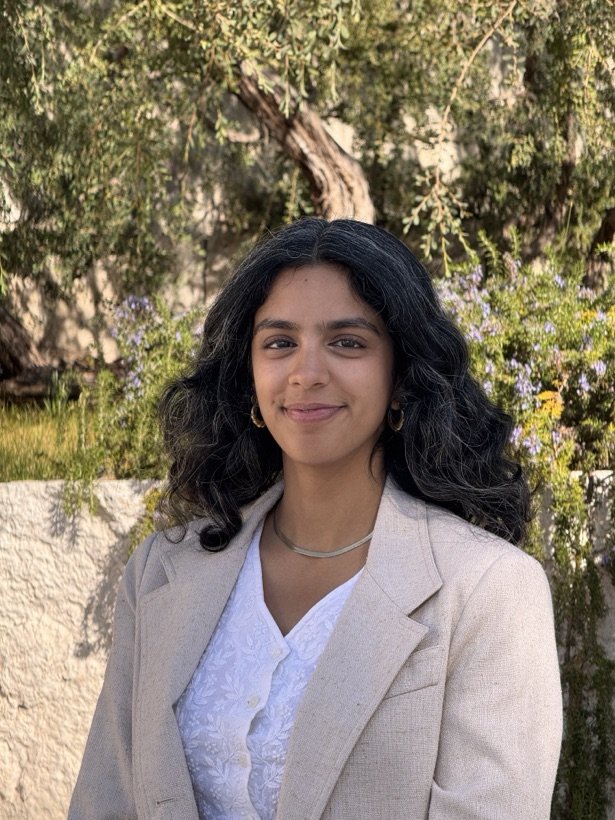
Charles R. Kaye Postdoctoral Research Fellow
Center for the Advanced Study of India
University of Pennsylvania
kamyay@sas.upenn.edu
I am the Charles R. Kaye Postdoctoral Research Fellow at the Center for the Advanced Study of India (CASI) at the University of Pennsylvania. I received my Ph.D. in Political Science from the University of California, Berkeley. My research sits at the intersection of gender and representation, party politics, and the political economy of development, with a regional focus on India.
My work examines how political institutions — such as quotas and party organizations — shape women's political participation, ambition, and representation, as well as citizen engagement with politics. This research spans India, Zambia, Malawi, and the United States, and draws on surveys, experiments, observational causal inference, and qualitative interviews and shadowing. My research has been supported by the American Political Science Association, the Jepson School of Leadership Studies at the University of Richmond, Global, International and Area Studies, the Institute for South Asia Studies, the Graduate Division at UC Berkeley, and SurveyCTO.
Previously, I worked and published on the information environment and misinformation as a research analyst at Graphika and a researcher for the Information Environment Project at the Carnegie Endowment for International Peace. I was also a Senior Data Science Fellow at the D-Lab at UC Berkeley. I hold a B.A. in Politics from Princeton University and an M.A. in Political Science from UC Berkeley.
Publications
Peer-Reviewed Articles
- Siwakoti, Samikshya, Kamya Yadav, Nicola Bariletto, Luca Zanotti, Ulaş Erdoğdu, and Jacob N. Shapiro. 2021. "How COVID Drove the Evolution of Fact-Checking." Harvard Kennedy School Misinformation Review. Access.
Book Chapters
- Yadav, Kamya, Alicia Wanless, and Samantha Lai. 2025. "Multilateral Efforts on Information Integrity: Why a Clearer Definition Is Needed." In Springer Handbook on Disinformation: A Multidisciplinary Analysis. Access.
Other Articles
- Siwakoti, Samikshya, Kamya Yadav, Isra Thange, Nicola Bariletto, Luca Zanotti, Alaa Ghoneim, and Jacob N. Shapiro. 2021. "Localized Misinformation in a Global Pandemic: Report on COVID-19 Narratives Around the World." Empirical Studies of Conflict, Princeton University. Access.
- Yadav, Kamya, Ulaş Erdoğdu, Samikshya Siwakoti, Jacob N. Shapiro, and Alicia Wanless. 2021. "Countries Have More Than 100 Laws on the Books to Combat Misinformation. How Well Do They Work?" Bulletin of the Atomic Scientists. Access.
Working Papers
-
Kinship and Women's Collective Action: Evidence from Patrilineal and Matrilineal Malawi
·PaperGlobally, women participate in local politics less than men. We focus on one underexplored obstacle: the psychological conditions that enable collective action. As part of a coordinated set of field experiments and drawing on social-psychological theory, we develop a months-long intervention in Malawi designed to foster women's collective identification, perceived injustice within gender-based hierarchies, and ultimately their collective efficacy. Our intervention increased women's participation in local politics, with effects varying strikingly by kinship. Counter to our expectations, effects were largest among women practicing patrilineal kinship — a system of descent, residence, and inheritance that structurally disadvantages women — than among women in matrilineal communities. Our findings suggest that interventions targeting the psychological foundations of collective action are especially effective where women face the greatest structural constraints, have fewer preexisting resources, and have less access to gender-based support systems. Our findings underscore how women's displacement from their natal kin ruptures their collective power.
Abstract
-
Are Women's Wings Barriers to Women's Political Advancement?
·PaperWomen's wings exist in 40 percent of parties worldwide, yet are uncorrelated with the share of women parties nominate. Why do women's wings enable women's political entry but not their political advancement? Using data from an original survey and conjoint experiment with 1,054 elites from two of India's largest parties, I find that party elites' promotion preferences overlap with the sociopolitical capital that women's wing leaders lack. Evidence from the survey and 106 elite interviews shows that an intentional organizational division of labor confines women's wing members to vote and crowd mobilization, away from consequential party work and decision-making. Unable to develop the sociopolitical capital elites prioritize in promotions and candidate selection, women's wing members are more likely to be passed over for promotion and candidacy than their peers in the party organization. The paper highlights that ostensibly egalitarian institutions can entrench male elite power by creating parallel, unequal career tracks that exclude women from centers of political power.
Abstract
-
The Limits of Intra-Party Competition for Women's Political Representation
·PaperParty candidate selection is a black box. Though we observe final candidate lists, winners, and losers during elections, we rarely see the pool of eligible candidates parties draw from. We leverage a unique phenomenon from Rajasthan's urban local body elections — "informal intra-party primaries" in which multiple aspirants file nominations for the same party ticket — as a rare window into this process. We ask where these primaries occur, why, and what they imply for the selection of women. Using candidate affidavit and administrative data from 2014 and 2019 urban local body elections, we show that informal primaries arise in competitive wards and less often in wards reserved for women. We find that they are likely driven by both party-led screening and candidate-led rent-seeking through hedging and rebel candidacies. Informal primaries have gendered consequences for candidate selection. We find that in wards reserved for women, parties screen on household rather than individual wealth. On the candidate side, we show that women who hedge candidacies and run as rebel independents do so out of necessity to get any ticket rather than rent-extracting leverage. Our findings suggest that upstream interventions in recruitment are necessary to improve both the quality and quantity of women's representation.
Abstract
-
Voluntary Party Gender Quotas as Reputation Building Strategies
·PaperWhy and when do political parties voluntarily adopt policies that are electorally costly in the short run? Existing explanations of party policy choice generally assume that adoption delivers immediate electoral benefit, yet parties routinely commit to publicly unfavorable policies whose payoff materializes only if voter preferences shift in their favor years later. Using voluntary gender quota adoption, I develop a theory of unpopular policy adoption as a long-run reputation-building strategy. I argue that opposition parties facing electoral threat from a better-resourced incumbent can use costly, semi-permanent commitments to signal credibility to voters, accruing a reputational premium when voter preferences shift. I combine a two-period signaling model with descriptive evidence from cross-national analyses of 73 voluntary party gender quota adoptions. The evidence shows that adopters are disproportionately opposition and left-leaning parties, that they incur short-run vote-share losses, and that the losses can reverse over subsequent election cycles. Qualitative case studies of two Indian regional parties, the Biju Janata Dal and the All India Trinamool Congress, complement the model and descriptive analyses by tracing their 2019 quota adoption and electoral outcomes over two cycles. The framework offers a unifying account of party behavior that integrates strategic electoral incentives with ideological commitments, and can generalize to other contexts of costly policy adoption.
Abstract
- "It's My Duty": How Social Norms Influence Peer-to-Peer Correction of False Claims Online
Works in Progress
- Unlocking Urban Democracy: Voter Engagement in Local-Level Zambian Politics
- Gatekeepers of Representation: The Role of Candidate Training Programs on Minority Candidate Supply